
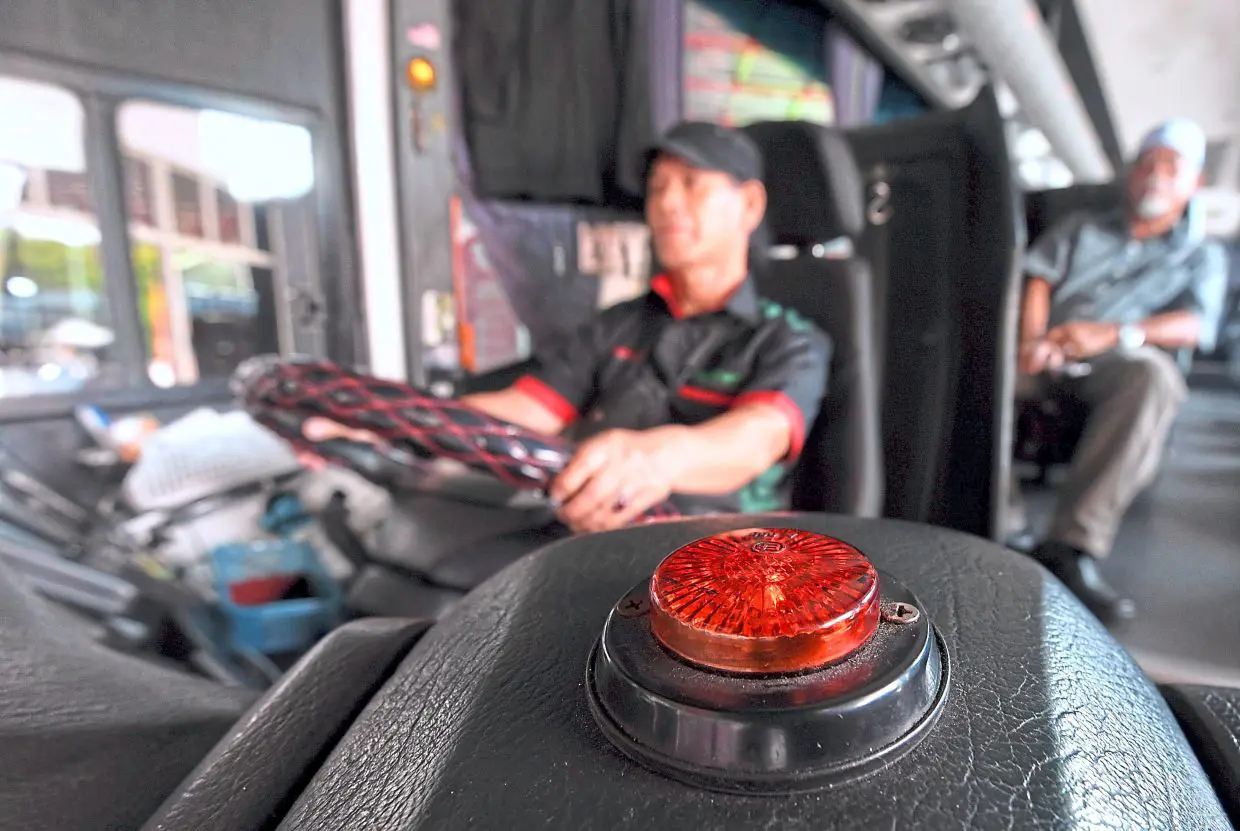
 PETALING JAYA: Road safety experts have urged the government to hold firm to its October enforcement deadline for speed limiter devices on heavy vehicles, warning that poorly maintained lorries and buses pose a grave risk to public safety.
They cautioned that delays could lead to tragedies such as the Universiti Pendidikan Sultan Idris (UPSI) bus crash, and called for stiff penalties – including fines higher than compliance costs and the immediate impounding of unchecked vehicles – to ensure operators take the rules seriously.
Road safety expert Dr Law Teik Hua said voluntary compliance has been alarmingly low, with fewer than 3,000 vehicles verified in the past three months.
“Given the risks posed by unchecked heavy vehicles, there is a strong case for zero tolerance after the October deadline,” he said when contacted yesterday.
Law warned that postponing enforcement will undermine both safety and the credibility of the authorities.
“Softening or delaying enforcement will send the wrong signal – that deadlines are negotiable and regulators not serious. For operators, it suggests non-compliance is a low-risk strategy. For citizens, it erodes confidence in the government’s ability to enforce safety standards,” he said.
He said penalties must be stiff to deter negligence, including hefty fines, suspension of licences for repeat offenders, and in serious cases, instant immobilisation of vehicles until proper checks are done.
On June 9, 15 UPSI students were killed and 33 others injured when their chartered bus collided with an MPV on the East-West Highway near Gerik, Perak.
Transport Minister Anthony Loke revealed on Wednesday that 97% of heavy commercial vehicles registered after Jan 1, 2015, have yet to verify that their speed limiters are functional.
Of 108,805 vehicles covered under the first enforcement phase beginning Oct 1, only 2,915 (2.68%) have complied – including 62 express buses, 33 tour buses and 2,820 heavy vehicles over 3,500kg.
Road Safety Marshal Club founder and president K. Bala also backed the call for zero tolerance, stressing that safety must come before sympathy for industry players.
“The road belongs to everyone – motorcyclists, car drivers, the elderly, even those with special needs. We cannot side with heavy vehicle operators and neglect others,” he said.
Bala said responsibility lies not only with drivers but also with haulage companies and regulators, which he described as the “3M factor” – man, machine and maintenance.
“The man must be competent, licensed and drug-free; the machine must be roadworthy; and companies must ensure proper maintenance schedules. It always comes back to the 3M factor,” he said.
He added that enforcement should be paired with advocacy, citing his club’s training for lorry drivers and even their spouses to promote safer practices, such as ensuring drivers are well-rested before long trips.
The Federation of Malaysian Consumers Associations also urged strict action against non-compliant operators, saying the three-month grace period is more than sufficient.
Its chief executive officer Dr Saravanan Thambirajah said allowing further delays will reward irresponsible operators and expose the public to unnecessary risks.
“The message should be clear: safety rules are non-negotiable and deadlines are to be respected,” he said.
He added that non-compliant heavy vehicles should be barred from the roads and subjected to substantial financial penalties to deter negligence.
Meanwhile, Malaysia Trucking Federation president Datuk Ng Koong Sinn said the low number of vehicles which had been registered with speed limiters was largely due to a lack of awareness among operators.
He said many had already installed the devices and obtained the necessary certificates.
“But they did not realise that they must also register through the JPJ portal,” Ng said.